Being Wrong Makes You Better
When he was alive, nature feared she would be surpassed by him; when he died nature feared she too would die. This is the inscription on the tomb of Raphael who is buried in the Pantheon in Rome. He died at the age of 37 in 1520. A master by the age of 20, he was a phenom, a meteoric star, Michaelangelo was jealous of the young man for whom beauty and life and power came so easily to him, the most sublime was like the inscription "natural" to him.
At the Met right now is a stunning collection of Raphael’s work. There are dozens of paintings, but most importantly, hundreds of sketches. This is what makes the exhibit such a once in a lifetime moment. For again and again you can see the evolution, the struggle of Raphael, the sketch upon sketch upon sketch before he painted. Sketching is the key to art, how art is made. For the most part, though, this is unknown for the sketches and the paintings are never seen together. So it may be hard to imagine how they are intertwined in creation. Rarely do you get to see them as one. Until the end of June, they are together and you can witness the painting emerge from the sketch. It’s like childbirth and spring and Easter in charcoal become paint.
Yet even more than this, greater still, is the story you can see and hear. The Met always has exhibits. Some are good, some are great. But every once in a while, they hit it out of the park. This is one of those times. What makes the story of the exhibit so powerful is the risk and humility and daring of Raphael is so clear. A master by the age of 20, he was in a place where he could have ridden his fame, he could have taken his place in the rare air of Renaissance elite, but twice he lays it aside, twice he stepped away from the safety of being great to become sublime.
His first step was to leave Urbino and move to Florence. In Firenze he hung out in the workshop of Leonardo DaVinci. What happened next is truly amazing. Raphael changed how he sketched; he took up a whole new way of drawing. He adopted and mastered the technique of Leonardo. Unthinkable. It was as if he was laying aside success for a chance. To do this he would have to unthink, undo, unlearn what made him great. And he did it. Where before his drawings where profound and powerful, now with Leonardo they came alive, filled with motion, gesture, energy. It was as if he became a master yet again.
The second step is a bit of lore with a lot of truth. The lore is that once the pope demanded Raphael move to Rome and become his artist, once inside the Vatican, Raphael found Michaelangelo locked in the Sistine Chapel. The second part is factual. Michaelangelo was the prisoner of the pope, forbade to leave until he finished the frescoes in the Sistine Chapel. The lore is how Raphael would break in and hang out, watch, absorb, ponder the way Michaelangelo composed and arranged and related the subjects in his works.
This is what the exhibit does so well: you can see the result, you can see the young man, now in his mid-twenties, you can see how again he changed the basic structure of his work, not by copying Michaelangelo, but by absorbing him, undoing his own security and leaping ahead to a vision of life where mortality and agony, beauty and hope seem to hang in the balance, become balanced.
Scholars will often say in the Renaissance art came alive. Like the transition from silent film to speaking, or black and white to color, things came alive in the Renaissance. And this is true, very true. Yet, with Raphael it was as if the liveliness of Leonardo and Michaelangelo, their realism and balance and power, it was as if he not only captured the truth of nature, life, he also captured the truth of spirit. He did this, I believe, because he was willing to be wrong, to say, there must be a whole other way of doing this, a better way of seeing this, a different way of creating this. Amazing.
I find the paintings and sketches of Raphael to be mesmerizing. They enrapture, heal, draw you in, but at the same time respect you and guard you. It is as if you are the child being held by the mother. Even more powerful though is how his story, his life is not restricted to art or the Renaissance or a stratospheric achievement. His story is the risk of being wrong, the power of humility. To achieve great success and then undo what made you successful, to achieve this greater success you must be willing to lay aside your confidence, to humble yourself. Raphael didn’t look at the brilliance of Leonardo and Michaelangelo and take up a posture of competition or arrogance. It was as if he said, they do this better; they are beyond me. And then, he joined them. In his humility he was exalted.
Humility is rightly to be feared. Meekness and humility always run the risk of weakness and humiliation. In Hebrew the word for humility suggests a lesser life, a weak position, brokenness, poverty even. Hence when Jesus says, "blessed are the meek for they shall inherit the earth," he is contradicting the common experience of humility. Think curse, not blessing. And the same is true in our parable today.
The parable of the humble and the exalted, the pharisee and the tax collector, it is perhaps one of Jesus’ most wily teachings. It is wily because you can read this as a proverb and not a parable and still find truth enough to live. Be humble, not arrogant; be penitent not self-righteous; do not boast, be modest. All are good advice. A proverb is good advice. Be kind and generous, not greedy and abusive. Most of what we teach children as they mature are proverbs. Better to share and care; better to tell the truth; better to play fair than win at all costs. Right? Right. But these are proverbs. Jesus gave us a parable. If we stick to the proverbial, we miss the power, the truth of what Jesus offers. Hence it is wily because it is so easy to stay with what comes easily.
What is hard to see here is the tension of the pharisee and the tax collector. The tension being we must hold them together, keep them together until they complement and reveal something deep inside us. Deep inside us is the need to be right, to be sure, to have a good reputation, to be a good person. We want to be seen as a human being with integrity and good morals, ethics. And, deep inside us is our need to be honest about brokenness and failure and darkness. There is darkness in us. There is darkness we hope people never see; there is light in us we hope they always see.
In a proverb, you choose one and reject the opposite. Choose light not darkness. In a parable you must consider both needs as essential, beyond question. This is us. You can see this in the conclusion, the adage of Jesus in the end. The exalted will be humbled and the humble will be exalted. The two go together in failure and in success. This is the daring part of the parable, the demand of trust Jesus makes of us. If you are willing to live in humility, then you will be lifted, you will be made right. When? How? Sooner rather than later? This is the risk of following Jesus: we live in contradiction not certainty.
Living in contradiction means you are always willing to be wrong and more importantly you learn to trust being wrong makes you better. I know this sounds strange, but it is not just parabolic wisdom, it is a principle of science.
For nearly a century science has recognized the heuristic principle. Scientists ask question, test theories, gather data so to demonstrate a truth they can repeat. This is proof. Once the proof is gained, science, scientists of all ilk move on. The herd of nerds in lab coats and protractors take on a new question. Heuristic means discovery. Once a discovery is made, scientists look for what is not yet discovered. The heuristic principle.
Yet, science also knows the trap of the heuristic principle. Once a discovery is made and seen as proof it becomes fact, and fact becomes law, and law becomes unquestionable. You are safe here; you can’t be wrong. And this is the trap. When you are no longer able to be wrong, you yourself become wrong.
I was with physicist in a lovely chateau in the highlands of Scotland and we were discussing relative physics as opposed to quantum mechanics. In the course of our discussion I suggested without concern how intriguing it will be once a speed is discovered beyond light, what moves faster than light. The physicist bristled and blustered and said, “impossible. There is nothing faster than light. Nothing.” Given this was his field of expertise and he was much smarter than me, I said nothing more.
I remembered this conversation though when headlines read, speed faster than light discovered. Light is no longer the fastest. I thought of the physicist and his certainty. There was no way he could be wrong. This is the trap of the heuristic principle. This is also the trap we fall into when we need to be right, to be certain, to be beyond question. We need to feel absolutely secure. We need to feel things are as they appear. This is necessary.
Yet, as can happen necessary things can become rigid; when certainty is beyond question, beyond being wrong, certainty loses the tension of the parable. It is good the Pharisee is not a liar, thief, rogue. We never say to someone who destroyed their marriage with infidelity, “well, good for you.” No. Of course not. But the Pharisee lost humility and the compassion found so often walking beside meekness. He lost the balance of being both right and wrong.
I am going to go out on a limb and say, most of us don’t want to be wrong; we want to be right. This is a good proverbial path: be a good kid, not a bad one. And I would say for the most part we are all very aware of our faults, our bias, our need to improve. Again, this is proverbial: better to be humble than arrogant. Yet, what the parable begs is the risk Raphael took and the physicist could no longer see. Raphael was able to see his success as something to risk, to look beyond, to imagine, what if I am wrong, what if there is another way, a greater way? The physicist could not see this: impossible. There is nothing faster than light . . . until there is.
The beauty of the parable is how we are invited in. We are invited to see the pharisee as wrong, the good one in error, and we are invited to see the tax collector as good, the broken made whole. Not one or the other. Both. Both are in us.
Being wrong makes you better. It does because we can only become more by seeing what is broken, what is not yet true.
No one likes being humiliated. No one seeks out shame. Jesus is not calling us to humiliation, but balance. We are light and dark. Both, balanced. Our parable is like the mother holding the child in the painting. You child are light and dark, truth and falsity, greatness and failure ever held aloft in love. Both. Amen.
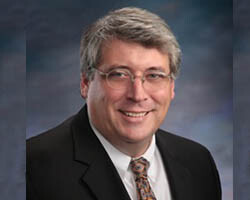
Rev. Dr. Fred G. Garry
Senior Pastor & Head of Staff
Sermon Notes
You can add your own personal sermon notes along the way. When you're finished, you'll be able to email or download your notes.