New Eyes Make You Better

I learned how to sketch with a technique called drawing on the right-side of the brain. Drawing on the right-side of the brain was a theory and practice developed by Betty Edwards in the 1970s. The basis of the technique is to turn things upside down and trick the brain.
Our brains are wired to think fast, work fast, resolve tasks and problems with the quickest and easiest solution. This is part of our survival as a species. We can drive a car while drinking a cup of coffee and carry on a conversation to a destination we've never seen because we can think very fast. Hence when asked to sketch a dog or a person or a house, our brain will draw a symbol. The symbol will have just the necessary components to be recognized and thus complete the task as quickly and efficiently as possible.
What is drawn looks awful, but it's done. This symbol drawing is why people claim, "I can't draw. I could never." Closer to the truth is how little our symbols reflect reality. The stick figure person is not pleasing to the eye.
The truth is everyone can sketch, draw. You can. Trust me. I have taught many to do this. I simply applied the technique of Betty Edwards and voila.
To draw, or sketch, we need to think slowly; we need to ponder, focus our gaze, attend to details of light and shadow, movement and dimension. You can't do this while driving a car, drinking a cup of coffee, and having a conversation. To sketch you must do one thing only.
To create this focus Betty Edwards took a picture of something and turned it upside down. Then she said, draw what you see. The results are amazing. The quick side of the brain is frustrated because the obvious symbols are gone and the task cannot be completely in lightening speed. The slow side of the brain, where we contemplate and consider, this side of the brain will say, "ah, thanks be to God. Something to do. Look at those shadows, look at the way the light is fading. Oh, my, what interesting lines." Soon enough the unwitting art student is drawing something, something real, not conceptual like a stick figure. Suddenly a dog is not a series of ovals but something one might actually meet in a backyard.
I'll let you in on a little secret. Please don't pass this around. Every Sunday when I get into the pulpit, after the reading and the prayer, my sole purpose is to turn the picture upside down. Be it mercy or justice, love or compassion, even beauty itself, my one goal, one purpose is to turn the world upside down. If I can achieve this, then for just a moment, maybe even a flash of a second, your memory, the slow thinking part of your brain, will experience a moment of illumination, eternal light will shine upon you, and you will experience a glimpse of freedom.
Take our reading today. This is a lovely story and an important one. Matthew, Mark, and Luke all record a version of this story; all place this as the last act of ministry Jesus does before he enters Jerusalem. This is a hinge story, or a moment of beginning and ending. As such the story takes on the heavy burden of encapsulating, conveying an essential quality of all preceding events and all succeeding events as well. To convey the meaning and have the meaning reach your heart, I must essentially turn the image upside down long enough so our busy quick-thinking brains ever moving to the next task and image and demand can stop; I need to turn the image over long enough your soul has a chance to say, "ah, there it is. The truth. I see it. Huh."
We can turn the world over with anecdotes of blindness. For instance, I developed a summer internship program for young people teaching them about community leadership. How do you change a community for the better? The first step was to get them out in the community. Summer after summer, students canvased their neighborhoods with invitations to meetings, surveys, tax map forms, and so on. All good and useful for the city, but was most useful was the restoration of sight, the healing of blindness.
The healing took about a week. At the end of the first week of canvasing all the interns would howl, "I had no idea." One young woman said it the best. "I had no clue where I lived. There are poor people all around me. Literally just a block away from me. I had no idea." Her name was Shannon and what Shannon was describing was blindness to suffering.
Most people don't want a big sign in front of their house saying, "lost my job" or "have a chronic condition" or "I am raising three children alone." You can't see this as you drive through town. But when you walk the city, when you walk the neighborhoods, things move slowly, you move slowly, people slow you down with stories and lives, hurts and hunger. Suddenly you see what moments before you could not see.
Blindness to suffering is often used as a cudgel. We say things like, "you are so blind" or "you don't see it do you?" These statements are hurled as verdicts, guilty verdicts of privilege or caste or race. "You just don't get it."
There is a lot of truth to this. I remember re-watching an episode of M.A.S.H. years after it first aired. The premise of the episode was a deal to get a plastic surgeon to help a young private get a nose job. To fly into a dangerous area the surgeon was promised an evening with Major Hulihan. When the surgeon sought his reward, it became clear how Margaret was not privy to her part and fought off the advances of the surgeon. As she ran from a tent, angered and assaulted, her colleagues laughed and shrugged their shoulders.
When I first watched this in the early '80s, this was comedy. Watching it now this is tragedy. A woman was compromised, assaulted, humiliated. In the span of forty years I could see what I was once blind to. I mentioned this revelation regarding the scene from M.A.S.H. to a young executive director of a non-profit. How good it is things have changed. She looked me dead in the eye and said, "things haven't changed as much as you think." In other words, I was still pretty blind.
This is an easy critique, a straw man sort of criticism. No matter our station or situation, all of us can attest to blindness. Who hasn't been embarrassed or frustrated because you just didn't see something coming, or you were clueless about someone, even yourself? "You are so blind" is an easy critique, but it is not the message beneath the story of Jericho. When Jesus sought to critique how we become blind to suffering he talked to the Pharisees. They were a target rich environment for indifference, disdain, all the forms of social blindness we must overcome.
No. The man in the story, sometimes called Bartimaeus, the blind man is not culturally blind, or naive, or lost in his quick-thinking brain, unable to contemplate. He is actually blind. He is not a metaphor, or a symbol. He is a person who is suffering. This is the key to our reading.
The gospel, the ministry and life of Jesus, be it in Galilee or what was soon to be in Jerusalem, the gospel relieves suffering. This is the through line. In Galilee and Samaria where Jesus walked and taught and performed miracles, all of this relieves suffering. Remember what Jesus told the disciples of John the Baptist when John was offended by Jesus' life. He said, tell John, the blind see, the lame walk, the hungry are fed, and the poor hear the good news. The relief of suffering is the base, the foundation, the key to the gospel.
Our reading today is not only a summary of what came before, the gospel heals those who suffer, our reading is also a great portent of what is to come. To relieve the suffering of others we must be willing to suffer as well, we must step forward like Jesus and head into Jerusalem. But we are getting ahead of the story.
Today, we have two moments to consider. The first is what we just remembered. The blind man is not a symbol. He is a real person who is suffering. The gospel, and by extension the church, the church and the gospel are good and true and beautiful when we relieve suffering. Remember Jesus didn't fight poverty, he fed the hungry; he didn't initiate a program or a policy, he restored the sight of one person. This is how dying churches today become vibrant churches. They bring real healing to hurting people.
The second moment to consider is the tenacity, faith, and choice of the blind man. Just as his suffering was real, so was his hope. Just as his healing is the purpose of the gospel, his faith is the essence of discipleship, being a Christian, being a follower of Jesus. To have a faith making you well, saving you, rescuing you from despair is what we must all achieve, seek, and find.
I learned to sketch by following the technique of Betty Edwards, turning the image upside down. In the same way, if we are to achieve the faith of the blindman we must turn our image of the world upside down. You know this image, the image of the world we are powerless to change, the image of our struggles, our demons, our failures we are powerless to change, the constant stream of tragedies and scandals and greed and wrongdoing we are powerless to change. Do you know the image? The life lived in resignation, the sense of hopelessness. I dare say it is a common image today. You can call it pessimism, cynicism, Nietzsche called it spiritlessness; Kierkegaard called it the sickness unto death, anxiety, dread.
To be a church today, we must relieve the suffering of the world wherever we find it, wherever we can, always asking those who suffer, what is it you would have me to do? This is the great scandal of the gospel, God becomes human and relieves suffering not on a grand scale, but one person at a time. And we must be willing to follow Jesus not only to find those who suffer, but also to Jerusalem where we are led to suffer as well. I have no doubt we will do such as a church. We are doing this and we will persist.
Where I wonder is the matter of hope. Are we willing to have an audacious hope, a tenacious hope, a hope overcoming the rejection of others? Can we live lives where our faith makes us well? Can we even imagine Jesus saying to us, your faith has saved you?
It is not hard to find fault, to make the charge of blindness. You just don't get it. You're so blind. I am, probably as you are, aware of my faults and failures, my misdeeds, the litany of shame. Can I be more informed, more aware, more sensitive, more enlightened? Of course. But the good news is not our brokenness; the good news is a faith making us well. Are we ready to share an audacious hope? Can we imagine a healing, a restoration or are we ready to manage, to mitigate our demise?
The blind man suffered; Jesus relieved his suffering. The blind man believed; he didn't give up; the faith of the blind man saved him. We are ready to heal, to bind up, to feed, to nurture. Are we ready to believe, to hope, to see again? We'll see. Amen.
Speaker: Rev. Dr. Fred G. Garry
July 12, 2026
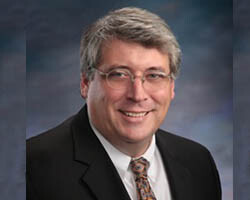
Rev. Dr. Fred G. Garry
Senior Pastor & Head of Staff
Sermon Notes
You can add your own personal sermon notes along the way. When you're finished, you'll be able to email or download your notes.