Trust Makes You Better
In 1942 Charles de Gaulle asked a young philosopher to draft a new constitution for France. Believing the Allies would defeat Germany, and France would once again be a nation, they would need a fresh constitution to guide them. The young philosopher was Simone Weil. From this request came a very curious and powerful consideration she called The Need for Roots.
The Need for Roots doesn’t look like our constitution; it reads more like a treatise than a declaration; there is no preamble or enumeration or rights. There were no rights. Weil argued rights were too weak to be the basis of a nation, a people. We needed to go deeper than rights, we needed to go to the roots of what it means to be human.
The root of being human according to Weil were fourteen needs of the souls. Being a philosopher the fourteen were seven dialectical pairs, ideas juxtaposed in complementary opposition. Oppositional pairs like freedom of opinion and truth; friendship and solitude. Weil said these needs are greater than rights; rights are something we agree to recognize, needs of the soul are something we must respect whether we agree or not because this is what it means to be human.
You and I need friends; and we need solitude, a sense of being an individual. We need to make up our own mind, but we need to recognize the truth is beyond us, greater than us. There are five more pairs. Fascinating, provocative. Although France would not adopt Weil’s Need for Roots as its new constitution, what she wrote was brilliant. The needs of the soul bring dignity, hope, value in ways rights, and a bill of rights, will never achieve. The needs of the soul make dignity and respect how we must live together.
Reading our lesson today from Luke I thought immediately of Simone Weil. I did because Jesus is describing a need of the soul. One of Weil’s seven pairs is the need for risk and the need for security. We need both. Life without risk is not worth living, hence it is a basic need; and life without security is untenable, life without security is trauma and trauma is destructive.
Weil argues we need risk because we need the unknown, the possible, the not yet of the future. I want to give two examples of risk: one mundane, the other profound.
The mundane. I have always wanted to see horses race. Not a horse lover, per se, but I really wanted to see them run. I imagined it would be awe inspiring.
So a few years ago we drove down to Monmouth and watched them race. Magnificent. So much power, speed, the relationship between the horse and jockey. I was blown away watching them. Then I placed a five-dollar bet on the next race. With just a little bit of risk the whole experience changed. It wasn’t just the speed, power, athleticism, it was risk: what if I won; what if my horse is the winner? I remember the moment after the race I thought, “O Simone! You are so brilliant.” What was intriguing became powerfully engaging; it touched a need of the soul.
The profound example of risk came from taking a pastor to lunch. Dick Leon was a successful pastor leading a church of thousands and just about to retire. I took him to lunch to learn, listen, say, “I am a grasshopper; you are a master.” We had a great time. Told me lots of stories. But his answer to one question changed my life.
I asked him, “about how many years into ministry were you when you pretty much had the lay of the land, you knew what to expect, how things work? How many years did that take?” Dick Leon laughed and said, “I never saw that day. Things are always changing, moving, growing in ways you can’t expect or predict. Never saw that day.”
I thought about this for a long time, what did he mean by this. I came up with two answers. Either life in ministry is so rife with chaos, so complex, riddled with too many contingencies it is beyond prediction; or life in ministry if it is lived with risk means you never really know what is coming next, you are living life in a way where all things are possible.
I chose the latter and it changed me. If there is no risk, no twist in the gut, no burning of ships and heading out to the unknown, then you are not living well. For life to be good you need risk.
We need risk and we need security. This one is not really confusing or odd—no need of horse racing, gambling anecdotes. The need for security though does need a limit, boundary. Security needs a limit because so often the need for security is lived by seeking control. Control is beyond a healthy sense of security.
We need to feel secure about life, but what I find most often is this need becomes a desire to be in control, control of yourself, control of others, control of a place. We don’t like people moving our stuff; we like to have order, a ritual to our day, where things are predictable. Consider how upset we get when our expectations are not met. Little disappointments are as if the end has come. You hear it in “I just wanted this to be simple; I just hoped to have a bit of time; I just needed things to not be a hassle.” We needed a sense of security, but we lived hoping for a modicum of control.
It is not by accident the most common form of future planning is called “social security.” We no longer speak of having locks on a house we talk about home security. We invest in securities. Perhaps one of the biggest debates of our generation is the Department of Homeland Security. I could keep adding to this, but you have the gist. Security is big, a need of the soul.
I was surprised though where I found the need for security. It wasn’t lived out not so much in money or expectations, but in something Jesus is pointing to in our reading. We need a sense of security about the past, and most important we need security about the past where we have experienced loss. Like risk, a mundane example and a profound one.
The mundane. In our house there is a phrase we use when people are lamenting or grousing or struggling with an unwanted outcome. We say, “shoulda-woulda-coulda”. This is code for “if only I could have done this; if only I had said this; I should have gone; things would be better if I would have kept this. And so and so on and so on. Shoulda-woulda-coulda.
We play the subjunctive game. How life might have been different if we would have . . .; or I should have known better, or if I could do this again. Call it Monday morning quarterbacking or regrets or hand wringing, but it is how we try to reorient our view to something better, more secure; we try to regain a sense of security from failure by asking shoulda-woulda-coulda.
I was surprised to find this, though, in the stages of grief. Elizabeth Kubler-Ross describes a series of stages in loss. Denial, anger, acceptance, depression, and bargaining. The five all made sense to me, I could see them clearly as people struggle with grief, I could see them all except bargaining. I couldn’t see bargaining. I took bargaining to be a desperate prayer to God, save my child, let me live, I’ll do anything God just get me out of this.
Then I came to see bargaining in grief is a very profound form of shoulda-woulda-coulda. Faced with loss at some point we try to reappraise, to reassess. If only we had done this; I should have done more; what a different life if I would have just spoken more. I wish I would have known he was ill, or, I could have done more, but I didn’t. It is as if we are bargaining for the value of life now lost.
In grief, one of the stages is to look back and see where and how things might have been different, might have better, should have been better. We are bargaining for a different value. Shoulda-woulda-coulda.
Without risk and security Jesus’ rambling series of anecdotes don’t make a lot of sense. Kingdoms, lightening, Noah and Lot’s wife; people in bed; people in a field; vultures gathering. But at the heart of this strange string of images comes the key to all of Jesus’ teaching, a pair of opposites whose juxtaposition complements without contradiction: those who try to make their life lose it, but those who lose their life will keep it. In other words you secure your life with risk.
One way of reading our passage is to focus on the hardship. The son will suffer; lightening strikes are not positive, they are dangerous; the flood of water and fire from the sky are both violent. Jesus warns us do not look back, don’t count loss. And my favorite, where the corpse is there the vultures gather. All of these are images of how life is precarious. Death is the only guarantee. All of these would be terrible, a Debbie-Downer-moment here. All of these would be very grim if it were not for the possibility, the hope, the need of the soul for security, safety placed next to the need for risk.
In the Fall we will start confirmation again. The lessons of our confirmation class all emerge from one question: “How do you trust?” Usually a confirmation curriculum is based on the idea of belief and faith: what is it you believe? What is your faith statement? Faith and trust are close; they share a meaning. But I like trust more because it conveys the elements, needs of risk and security. Do you believe in the bible? is a confirmation question. But a better question at this stage of life might be, how do you trust the bible? How do you trust God? How do you trust the church? How do you trust yourself? At the heart of these questions is a need for security, but also an element of risk. What if my faith proves untrustworthy?
How do you trust Jesus is right? If you lose your life, if you give your life away, how are you sure, how is it certain you will keep it? There is no honest answer to this without risk. You must trust Jesus is telling the truth. If I give my life away to my wife, to my children, to my family and friends with no expectation of return, how can I trust my life will come back? I will need my life back at some point. Right? How do I know for sure my life comes back?
This brings us back to Jesus’ list of images. Not a lot of certainly in flashes of lightening. Don’t look back. Okay. But what if back there is my security, my identity, all the things I have grown to trust are back there? I just figured out this part of life, and now what, am I supposed start over?
This was how Dick Leon’s advice changed me. If you live in the predictable, inevitable, if you don’t give your life away, your life becomes half-life, death—where vultures gather. That is a guarantee without risk.
Better to live forward, with the unknown, the twist in the gut. When did you find the lay of the land, what to expect? I never found that day. We need to feel secure. How strange to consider the only way to be secure is to risk, keep by losing. Trust although risky makes us better, more secure. Amen.
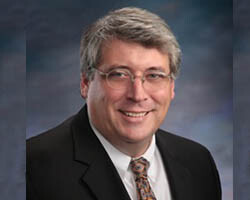
Rev. Dr. Fred G. Garry
Senior Pastor & Head of Staff
Sermon Notes
You can add your own personal sermon notes along the way. When you're finished, you'll be able to email or download your notes.