A Beautiful Mess
John Calvin became a reformer when he fled Paris, traveled to Strasbourg in 1535. Calvin was a classicist, a Hebrew scholar. An academic. Most importantly for us Calvin believed the people should have the Bible, not just scholars, people. People should read the bible on their own. Hence, when his cousin, Olivetan, translated the New Testament into French Calvin wrote a preface, a kind of "how to read this" introduction. For this both Olivetan and Calvin were considered outlaws, they were hunted.
Perhaps just as important was another belief. Calvin, like all his Reforming allies, Calvin trusted Martin Luther. He trusted what the renegade monk proclaimed. Luther claimed we are both sinner and saint. We are simul iustus et peccator. We are both wonderful and terrible, righteous and sinful. We are both.
As the Protestant movement took form and remade the church for the next century, a second revolution occurred, the scientific revolution. Beginning with Copernicus and then to Galileo and finally reaching a zenith in Isaac Newton, the way we look at the world, creation, nature all of this was turned upside down. The laws of physics were discovered and with this a whole new path of truth and certainty.
Living in a time when we hear daily warnings about the threat of science, the dangers of artificial intelligence, we may not be in a place to celebrate Copernicus, Galileo, and Newtown. Some could argue they opened pandora's box. This was the claim of the Roman Catholic Church in the sixteenth century, especially about people reading the bible on their own. Once you opened the door, once people could read the bible in their own language everything will fall apart. The masses will have no control, and all will be lost.
It wasn't true of the bible then and perhaps it will not prove true of technology today. We, you and I, humanity have a strange failsafe. We are incredibly smart, savvy, create all sorts of wonders, but we are prone to self-destruction, our worst enemies, tear down all the wonderful things we make. It is as if all we build and believe are sandcastles ever being erased by the tide. There is little we do outlasting us.
You can take this as a dark cynicism, much like the writer of Ecclesiastes did, lamenting the futility of legacy, building something beyond you, believing all is squandered. You can take the failsafe as an Achilles heel, weakness infused in us by lesser gods. You can, but you can just as easily see it as the great contradiction of life, the opposites whose compliment creates wisdom. We are powerful and weak, the image of God and a "worm" according to Calvin and the Psalms. We are a beautiful mess.
This compliment in contradiction is found in the opening lines of Norman Maclean's novella A River Runs Through It. Maclean is describing how his father looked at life, how a Presbyterian minister viewed the world. He wrote, “As a Scot and a Presbyterian, my father believed that man by nature was a mess and had fallen from an original state of grace. Somehow, I early developed the notion that he had done this by falling from a tree. As for my father, I never knew whether he believed God was a mathematician but he certainly believed God could count and that only by picking up God's rhythms were we able to regain power and beauty. Unlike many Presbyterians, he often used the word 'beautiful.'”
One way of reading American history is to see it as a beautiful mess. Indeed, by the time you reach 1776, the tension, the contradiction of Noman Maclean's father was already the ethos of the newly formed more perfect union. One could read Jefferson's claim of union as a joining of colonies, a collecting of would-be states. It is most likely what he meant by more perfect union. But you can also see those words, hear them as an attempt to join, reconcile, "regain power and beauty" of the soul, creation, people, even a state. A more perfect union being the harmony of our contradictions, our saintliness and sinfulness. Even more, perhaps most important, this more perfection union was an experiment of the people, by the people, for the people—the confidence of Calvin centuries prior.
One way of reading and thus celebrating 250 years of history is to read our life, both our future and our past, as a wildly optimistic belief in ourselves and deeply held cynicism about what happens to us with power. This is the great wisdom of the constitutional convention. The framers diffused power amongst three branches of government believing there must be dispersed power, a check and balance. No one should ever be unchecked. We can do great things, but we are ever own greatest risk. The balance of power was a way of trusting we are a beautiful mess.
What often annoys people about the American spirit is how it is at the same time humble and indomitable. We are outcasts, without royal line or divine right, yet we also believe our wilderness is our strength, being untamed is somehow a beautiful thing. We have Theodore Roosevelt to thank for this. Being healed by the wild, he perceived how such unboundedness, if preserved, would be a strength for generations to come. Hence we have the wild, untamed beauty of our national parks.
You can read American history as the compliment of contradictions, but you can also read life this way. Life is lived in contradictions. We are ever sinner and saint, image of God and worm. While this is our common fate, there is a unique unfolding of the contradiction in each of us. And just as it is true of each person, so it is of this nation.
In 1776 America was unique, a wild confluence of two tectonic shifts in the Western world. We were born of Protestantism, the power it afforded to people; and we are born of the scientific method, the power of nature writ large. Heretofore this combination had never been the basis of a nation. It was as if "God's rhythms" were given a new world to breathe in, a place beyond tradition, ancient ties, beyond generational limits.
You can read American history this way, but at the same time remembering the limits, the failsafe. Look to the indomitable spirit, yes; but also bear in mind the power of greed, the destruction all humans bring to each other. Scientific experiments try to eliminate variables and bias. But when the experiment is democracy, such elimination is impossible. 250 years has great triumph and great tragedy.
When Jesus gave his last parable, his last parabolic story in Luke, he was not talking about America or democracy or scientific experiment. The parable of the rented vineyard is not a call for revolution nor a railing against the empire to foster rebellion. The parable of the rented vineyard is not a political statement or basis of religious nationalism. It is though a way of measuring all our attempts to live together; the parable is a scale to weigh any attempt to achieve a more perfect union whenever you seek such.
Through the centuries this parable became a source of great evil. Interpreting the parable of the rented vineyard as an allegory much abuse, violence has occurred. The classic allegorical interpretation is when God is the owner, Jesus the son who is killed, and the Jews are the tenants. The time given to the renters was the time of Moses and the Prophets, a time coming to an end when the rent was to be collected by John the Baptist. The violence of the owner, the logical conclusion, has been seen as a mandate, a basis for violence and antisemitism.
Parables are never interpreted well with allegory. At some point it falls apart, and the conclusions are warped and twisted. The parable of the rented vineyard at its heart is about violence, the cycle of violence. It leans heavy on our failsafe, our Achilles heel, our never-ending penchant toward self-destruction, our messiness. The parable is a bleak and pessimistic way of looking at our life together. The message it gives is this: violence is our only means of victory, gain, freedom. Violence is our fate. We hear this when we say, violence begets violence.
If this is where the parable ends, we are not better for knowing it. Yet, a parable is meant to challenge an assumption. This parable challenges one of our greatest assumptions: the necessity of violence. The inevitability of violence. This parable is meant to beg the question: can the cycle of violence be broken? Can we achieve freedom and triumph without vengeance?
As Jesus walked the levant and beyond he offered many teachings about how you and I can achieve freedom without violence. He said, don't be angry, don't trust vengeance, turn the other cheek, be great by being the least, lose your life to save it. He said we must let go of all expectations, even family and tradition, we must leave them all aside to reclaim them in freedom. He declared the son of man is the Lord of the Sabbath. This is the great call to conscience; the declaration we choose to live unto freedom not fear.
Our parable today is part of this theme, this philosophy of freedom. But it also a dare, the possibility of failure. We offer violence, justify it, trust in our anger and thus are trapped in the cycle of destruction. The parable begs the question can you dream beyond this; can you imagine a life beyond this violence? Can you build a house on peace on a rock, not sand; can a community be built on meekness, a people governed by freedom without greed? Is this possible? Can you see the kingdom of God?
The response of the pharisees must be heeded. They were afraid of this question, this cornerstone once rejected. They were able to trust the messiness of life, but not a beautiful mess. For them life was best live in obedience to the law, not an obedience to joy. We must not condemn them for this. This is the likely response of fear, the fear we so often trust.
The unique confluence of events giving rise to the declaration of independence 250 years ago, the crossing of wires, the power of people born of the Reformation and the power of nature unbounded by the scientific revolution was the particular soil where this nation was planted. Into this moment of potential freedom came a wise decision, given our messiness, our penchant for destruction, how poorly we do with too much power, let's diffuse it, create a system of checks and balances so we will not trip over the cornerstone.
Such a diffusion did not create a utopia, nor did it forestall all our inclinations for destruction and abuse. It was not magic, nor a guarantee. What is worth celebrating and pondering was the risk, the belief: this diffusion of power for the people, this could break the cycle of violence in our parable; this could create liberty and justice for all. What we must ponder, strive for today is asking the question anew. Can break the cycle of violence, creating a more perfect union, liberty and justice for all? Do we believe this us today?
The answer to the parable is not in a party or politician; the answer is not in courts or laws; not even found in rights, liberties. The answer to the parable is how much we trust the beautiful mess. Do we believe we can live as sinner and saint and trust our neighbor to do likewise? Can we be both humble and indomitable, looking to the future without denying the past? Can we read the parable anew? I believe we are a beautiful mess and thus welcome in the kingdom of God. What say you? Amen.
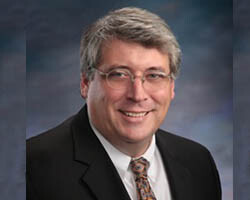
Rev. Dr. Fred G. Garry
Senior Pastor & Head of Staff
Sermon Notes
You can add your own personal sermon notes along the way. When you're finished, you'll be able to email or download your notes.